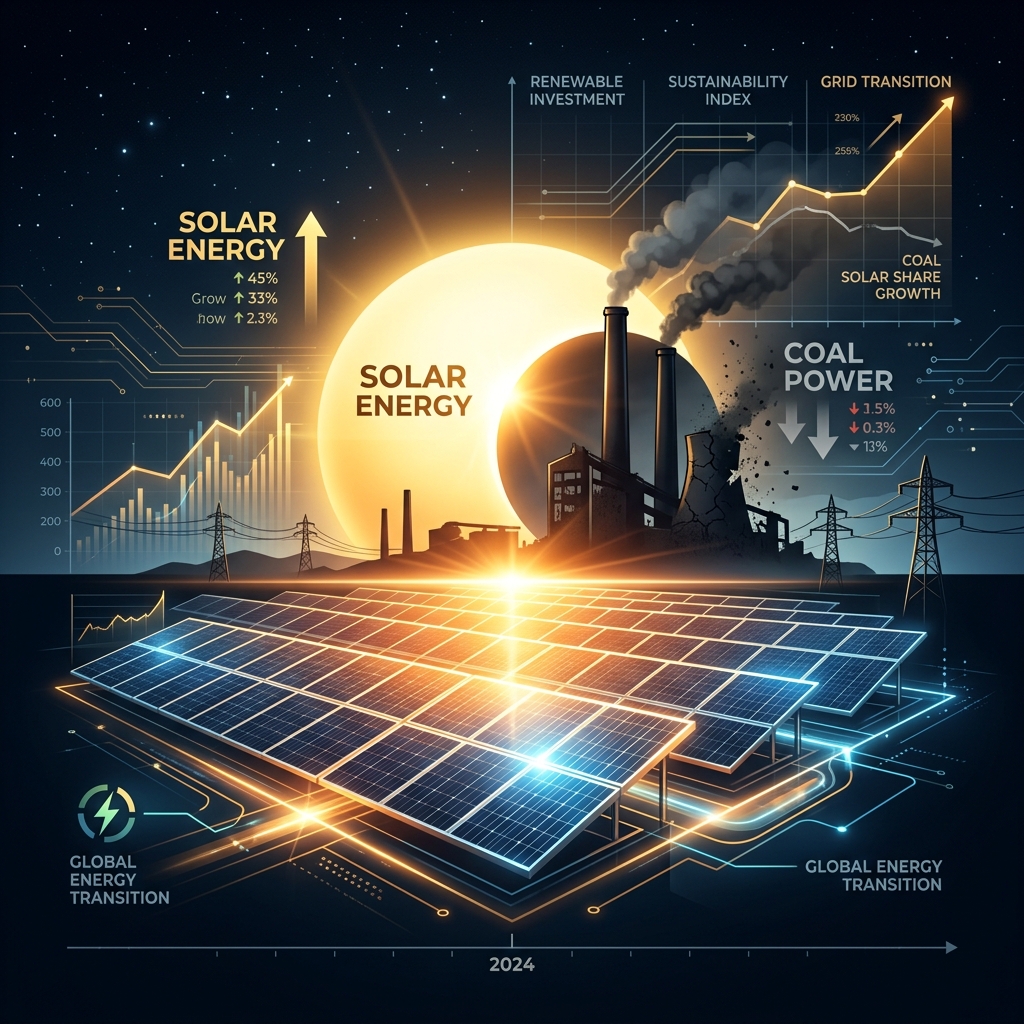
The middle of June 2026 is shining a bright light on the global energy transition. From the power grids of the United States to the regulatory halls of Frankfurt and the tropical archipelago of the Philippines, sustainable finance and renewable deployment are picking up speed. While fossil fuels are feeling the heat, regulators are expanding their horizons to protect the natural systems that sustain us.
Here are the green business stories that matter today.
A Sunny Disposition: US Solar Overtakes Coal Generation
In a historic milestone for the US power sector, utility-scale solar generation officially eclipsed coal-fired power for the first time in monthly generation records. Data from May 2026 confirms that the relentless expansion of photovoltaic capacity, coupled with the ongoing retirement of legacy coal plants, has tilted the balance of power.
While coal was once the bedrock of the American industrial engine, it has increasingly been sidelined by more cost-competitive, clean alternatives. For grid operators and climate advocates alike, this isn't just a flash in the pan—it is a clear sign that the sun is setting on the era of coal, and rising on a modern, decarbonized grid.
Beyond Carbon: ISSB to Standardize Nature-Related Disclosures
As carbon reporting becomes institutionalized under the International Sustainability Standards Board (ISSB) framework, standard-setters are turning their attention to the next frontier: biodiversity. The ISSB announced plans to publish an exposure draft by October 2026 for nature-related financial disclosures.
Complementing the existing IFRS S1 and S2 rules, this new framework will require companies to disclose how their operations impact and depend on nature and ecosystems. The goal is to prevent corporate greenwashing by forcing boardrooms to account for deforestation, soil degradation, and water stewardship with the same mathematical rigor they apply to greenhouse gas emissions. For companies accustomed to treating nature as a free externality, the bill is about to arrive.
Manila's Green Rush: Philippines Green Lanes Fast-Track $6 Billion
Meanwhile, in Southeast Asia, policy innovation is driving a massive influx of clean capital. The Philippine government's "Green Lane" initiative—designed to slash bureaucratic red tape for strategic renewable energy projects—has certified over $6 billion in investments in the first five months of 2026 alone.
By fast-tracking permits and simplifying environmental assessments for 13 system-critical projects, the country is rapidly transforming its energy profile. It is a powerful reminder that while capital is ready to flow into green infrastructure, the biggest bottleneck is often not finance, but the slow wheels of bureaucracy. By oiling those wheels, the Philippines is showing the world how to accelerate the transition at warp speed.
The EcoInvestor Takeaway
Today's developments showcase a green transition that is both physical and institutional. As solar power establishes its dominance on the grid, global accounting systems are evolving to capture the true cost of ecological destruction, and governments are learning that policy efficiency is the ultimate catalyst for clean investment. For ESG investors, the message is clear: the transition is moving beyond mere corporate pledges and entering the phase of massive, measurable deployment.
Sources
- Electricity Data Explorer - Ember
- Renewables - International Energy Agency
- ISSB work plan - IFRS Foundation
- Green Lanes for Strategic Investments - Philippines Board of Investments